
 Martin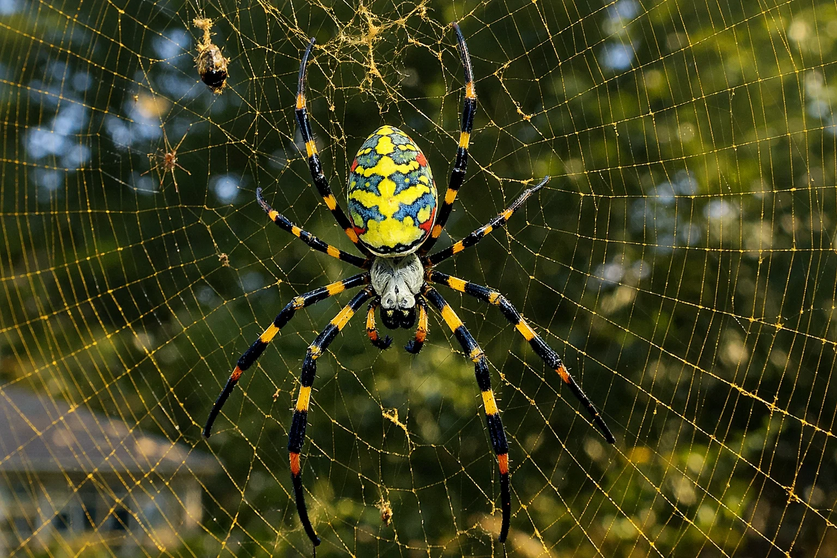
The Joro spider has quickly become one of the most talked-about arachnids in recent years. With its vivid colors and massive golden webs, it creates a striking visual that is hard to ignore. First noticed in the United States around 2014 in Georgia, this East Asian species has steadily expanded its range, sparking both curiosity and concern. Despite its intimidating appearance, this spider tells a fascinating story of adaptation, resilience, and ecological balance that deserves a closer look.
What Is the Joro Spider?
The Joro spider (Trichonephila clavata) belongs to the orb-weaver family, a group known for spinning intricate, wheel-shaped webs. Native to Japan, China, Korea, and Taiwan, it thrives in temperate and humid climates. Its introduction into the United States is believed to have occurred through international cargo shipments, making it a classic example of accidental species migration.
What sets this species apart is its remarkable size and web-building ability. Female spiders can grow up to 2.8 cm in body length, with legs extending much further, creating an impressive visual span. Their webs, often exceeding three feet in diameter, shimmer with a golden hue under sunlight, earning them the nickname “golden orb-weavers.” These spiders typically remain outdoors, quietly suspended in their webs during the day.
Physical Characteristics and Identification
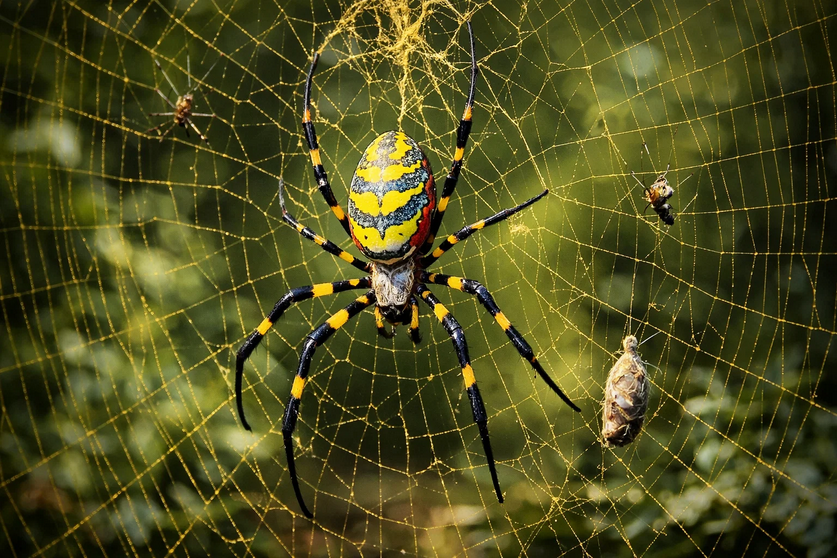
One of the easiest ways to recognize a Joro spider is by its bold and vibrant coloration. The females, which are significantly larger than males, display a striking combination of yellow, blue, and black patterns across their bodies. Their long legs feature alternating bands, giving them a dramatic, almost ornamental appearance.
Key identifying features include:
- Bright yellow-and-black banded legs
- A bulbous abdomen with vivid striping
- Distinct red markings on the underside
- Large, golden-colored webs that glisten in sunlight
Males, in contrast, are much smaller and less colorful, often going unnoticed. Egg sacs are another identifying clue, appearing as pearl-like, oval structures that contain hundreds of eggs. These visual traits make identification relatively straightforward compared to other orb-weavers.
Habitat and Expanding Distribution
Originally confined to East Asia, the Joro spider has rapidly spread across the southeastern United States. Since its first appearance in Georgia, it has expanded into states like South Carolina, North Carolina, Tennessee, and Maryland. Researchers predict further movement into the Mid-Atlantic and possibly the Midwest, especially as climate conditions become more favorable.
These spiders prefer environments that offer both structure and insect activity. Common habitats include:
- Forest edges and wooded areas
- Gardens and suburban yards
- Power lines, fences, and porches
- Urban spaces with moderate vegetation
Their ability to tolerate noise, vibration, and human presence has allowed them to thrive in cities and suburbs. This adaptability is a major factor behind their rapid spread.
Behavior and Daily Life
The daily routine of a Joro spider is both efficient and fascinating. During daylight hours, it remains mostly still, hanging in the center of its web and waiting for prey. At night, it becomes more active, repairing or rebuilding its web to ensure maximum effectiveness for the next day.
These spiders are known for their:
- Diurnal hunting behavior (active during the day)
- Frequent web rebuilding every 1–2 days
- Unique ability to form loose web clusters, sometimes called “web cities”
Unlike many solitary spiders, they can tolerate proximity to others without aggression. This unusual social tolerance increases their overall hunting success and contributes to their rapid population growth.
Diet and Feeding Habits
The Joro spider is a generalist predator, meaning it consumes a wide range of insects. Its large, sticky web acts as an efficient trap for flying prey, making it an important natural pest controller in many environments.
Common prey includes:
- Mosquitoes
- Flies
- Moths
- Grasshoppers
- Invasive pests like stink bugs and spotted lanternflies
Interestingly, studies show that these spiders often avoid certain beneficial insects. For example, they tend to reject monarch butterflies, with research indicating that a large percentage are released from webs unharmed. This selective feeding behavior suggests a more balanced ecological role than initially feared.
Reproduction and Life Cycle
The life cycle of the Joro spider is relatively short but highly productive. Mating typically occurs in the early fall, between September and October. Males approach females cautiously, using vibrations to signal their presence and avoid being mistaken for prey.
After mating:
- Females lay 400–500 eggs per sac
- Egg sacs are hidden in protected areas like foliage
- Adults die shortly after reproduction
- Eggs hatch in the spring
Young spiderlings disperse through a process called ballooning, where they release silk strands that catch the wind and carry them over long distances. This method plays a significant role in their rapid geographic expansion.
Are Joro Spiders Dangerous to Humans?
Despite their large size and bold appearance, the Joro spider is considered harmless to humans. It is naturally shy and avoids confrontation whenever possible. Bites are extremely rare and typically occur only when the spider feels directly threatened.
If a bite does happen:
- It may feel similar to a mild bee sting
- Symptoms are limited to minor redness or irritation
- No serious medical complications are associated
Unlike more dangerous species such as black widows or brown recluses, this spider does not pose a health risk to people or pets. Observing it from a distance is both safe and recommended.
Ecological Impact as an Invasive Species
As an introduced species, the Joro spider has raised questions about its ecological impact. While it does compete with native spiders, current research suggests that its presence is not as destructive as once feared.
Potential impacts include:
- Competition with native orb-weavers
- Changes in local insect populations
- Reduction of agricultural pests
At the same time, it provides clear benefits by controlling nuisance insects. Entomologists emphasize that ecosystems often adapt over time, and the long-term effects of this species are still being studied. Early findings indicate a complex but manageable ecological shift rather than a crisis.
Identifying Joro Spiders vs Similar Species
Confusion can occur when trying to distinguish the Joro spider from other orb-weavers. One common lookalike is the black-and-yellow garden spider (Argiope aurantia), which shares a similar color palette but differs in structure and web design.
Key differences include:
- Joro spiders have longer legs and larger webs
- Their webs often appear golden in sunlight
- The underside features distinct red markings
- They are generally more vibrant in color
Another comparison is with native golden silk spiders, which tend to have duller colors and smaller webs. Careful observation of these traits helps ensure accurate identification.
Managing Joro Spiders Around Your Home
For most homeowners, the presence of a Joro spider is more of an inconvenience than a threat. Their large webs can occasionally appear in high-traffic areas, prompting the need for simple management strategies.
Effective approaches include:
- Using a broom or vacuum to remove webs
- Trimming vegetation to reduce web anchors
- Avoiding chemical pesticides that harm beneficial insects
These spiders rarely enter homes, preferring outdoor environments. In many cases, leaving them undisturbed allows them to continue providing natural pest control.
Common Myths and Misconceptions
The rapid spread of the Joro spider has led to several exaggerated claims. Media coverage and social media have contributed to misunderstandings about their behavior and danger level.
Common myths include:
- “They can fly” – In reality, only spiderlings disperse via ballooning
- “They are deadly” – Their venom is mild and not dangerous
- “They will take over ecosystems” – Current research does not support this
Separating fact from fiction helps reduce unnecessary fear and encourages a more balanced perspective on their presence.
The Future of Joro Spiders in North America
Looking ahead, the Joro spider is expected to continue expanding its range, particularly in regions with suitable climates. Warmer temperatures and urban adaptability may accelerate this process.
Scientists predict:
- Gradual movement into northern and midwestern states
- Increased familiarity among residents
- Continued monitoring rather than eradication efforts
As public awareness grows, the initial fear surrounding this species is likely to fade, replaced by a more informed understanding of its role in the environment.
Conclusion
The Joro spider represents a fascinating blend of beauty, adaptability, and ecological complexity. From its origins in East Asia to its growing presence across the United States, it has captured attention with its vibrant appearance and impressive web-building skills. While its status as an invasive species raises valid concerns, current evidence suggests that it also provides meaningful benefits, particularly in controlling pest populations.
Rather than viewing it solely as a threat, it is more accurate to see this spider as a new participant in evolving ecosystems. With continued research and awareness, people can learn to coexist with this remarkable arachnid while appreciating the unique role it plays in nature.
FAQs
1. Do Joro spiders bite humans?
Bites are extremely rare and usually occur only when the spider is provoked. The sensation is mild, similar to a bee sting, with no serious health effects.
2. Where are Joro spiders found in the United States?
They are most common in the Southeast, including Georgia and the Carolinas, and are gradually spreading northward.
3. Are Joro spiders poisonous?
They possess venom for subduing insects, but it is not harmful to humans or pets.
4. What do Joro spiders eat?
Their diet includes mosquitoes, flies, moths, and invasive pests like stink bugs and lanternflies.
5. Can Joro spiders fly?
They cannot fly. However, young spiderlings use silk threads to travel through the air in a process called ballooning.
6. How can I remove Joro spider webs?
Webs can be removed with a broom or vacuum. Avoid pesticides, as they can harm beneficial insects.
7. Are Joro spiders beneficial?
Yes, they help control pest populations and contribute to ecological balance despite being an introduced species.
Get more updates or Stories on Pep Boys