
 Martin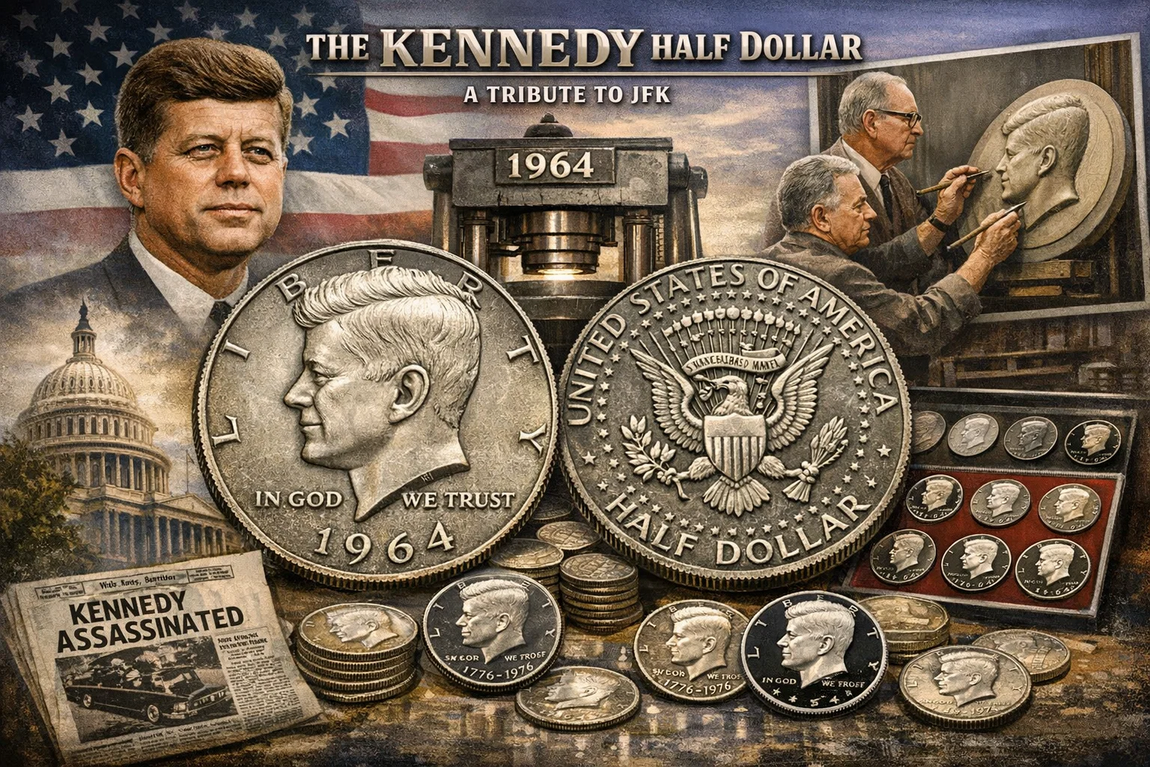
The Kennedy half dollar is one of America’s most recognizable and historically significant coins. First issued in 1964, it commemorates the life and legacy of President John F. Kennedy, the 35th President of the United States, who was tragically assassinated in November 1963. Designed by Gilroy Roberts and Frank Gasparro, the coin was produced rapidly to honor the late president, quickly becoming both a collector’s item and a treasured symbol of national remembrance. Over the decades, it has undergone metal composition changes, commemorative editions, and special releases, solidifying its place as a coin of historical, numismatic, and cultural importance.
The Birth of the Kennedy Half Dollar
The assassination of President Kennedy on November 22, 1963, prompted an immediate effort to create a commemorative coin. Within hours, Mint Director Eva Adams contacted Chief Engraver Gilroy Roberts, instructing him to consider Kennedy for a larger silver coin. Jacqueline Kennedy preferred the half dollar, believing it would be a respectful tribute without replacing George Washington on the quarter. Roberts adapted his existing bust of Kennedy from the Presidential medal series, while Frank Gasparro modified the reverse design of the Presidential Seal. By January 1964, the dies were ready, and the first coins were struck, marking the start of a legacy that continues today.
Iconic Design: Obverse and Reverse
The obverse of the Kennedy half dollar features a left-facing profile of President Kennedy, designed by Gilroy Roberts, while the reverse, crafted by Frank Gasparro, displays the Presidential Seal, with the eagle clutching arrows and an olive branch. Both artists’ initials—GR and FG—appear subtly on the coin. These designs were adapted from previous Kennedy medals, ensuring accuracy and a personal touch. The obverse’s left-profile bust was chosen for aesthetic appeal, while the reverse emphasizes Presidential authority and dignity, making the coin both artistically pleasing and historically significant.
Public Reaction and Initial Release
The Kennedy half dollar was released to the public on March 24, 1964, generating immediate excitement. Long lines formed at Treasury windows as citizens and collectors rushed to obtain the coins. Despite rationing, demand far exceeded supply, and the 90% silver coins were hoarded almost instantly. Within months, most coins were out of circulation, and collectors treasured them for both their silver content and as a commemorative keepsake. By the end of 1964, nearly 430 million Kennedy half dollars had been minted, making it one of the largest mintage years for a U.S. half dollar series.
Changes in Metal Composition
Rising silver prices and public hoarding prompted changes in the Kennedy half dollar’s composition:
- 1964: 90% silver, 10% copper
- 1965–1970: 40% silver (silver-clad)
- 1971 onward: No silver; copper-nickel clad
The move to silver-clad and eventually copper-nickel coins was intended to reduce hoarding and encourage circulation. However, even base-metal coins circulated sparingly, as public habits and collector interest kept the half dollar largely out of daily use. Today, collectors prize early silver issues for their historical and investment value.
The Bicentennial Kennedy Half Dollar
For the United States Bicentennial, the Kennedy half dollar received a special reverse design by Seth G. Huntington, depicting Independence Hall with a double date, 1776–1976. Over 521 million coins were minted in both copper-nickel and silver-clad versions. This special issue became iconic, linking the half dollar to a broader celebration of American independence and showcasing the Mint’s ability to produce coins that blend artistry, symbolism, and historical significance.
Circulation and Hoarding Trends
Despite large mintages, the Kennedy half dollar has rarely been widely used in commerce. Many coins were hoarded for their silver content, as keepsakes, or as collector items. Banks and vending machine operators, once heavy users of half dollars, gradually stopped ordering them. By 1987, production for circulation was temporarily halted due to existing stockpiles. Even after resuming circulation in later years, public use remained limited, making the Kennedy half dollar a coin more often seen in collections than in daily transactions.
Collector Editions and Rare Varieties
Collectors prize certain Kennedy half dollars for their rarity and historical significance. Notable examples include:
- 1964 Accented Hair proofs
- 1964 Special Mint Set (SMS)
- Bicentennial 1776–1976 silver-clad issues
- 50th Anniversary gold and silver coins (2014)
- Enhanced Reverse Proofs (2019)
These coins often feature special finishes, limited mintages, and unique designs, making them highly sought after. Some rare varieties, such as the 1964 SMS half dollar, have sold for over $40,000, highlighting the series’ numismatic importance and investment potential.
The 50th Anniversary: 2014 Special Issues
In 2014, the Mint celebrated the 50th anniversary of the Kennedy half dollar with seven special coins in clad, silver, and 99.99% gold. The gold coin carried the double date 1964–2014. The commemorative coins featured higher relief designs and were released during the American Numismatic Association convention, emphasizing both the half dollar’s cultural significance and its appeal to collectors. These anniversary editions reinforced the coin’s status as a treasured national symbol and a centerpiece for numismatic collections.
Modern Redesigns and the 2020s
The Circulating Collectible Coin Redesign Act of 2020 paves the way for several updates to the Kennedy half dollar. In 2026, the coin will commemorate the United States Semiquincentennial, celebrating 250 years of independence. From 2027 to 2030, the reverse will feature Paralympic sports, while the obverse may be redesigned in 2027. The Mint announced that the 1776–2026 half dollar will depict the Statue of Liberty on the obverse and Liberty’s torch being passed to a new generation on the reverse, blending tradition with modern symbolism and marking a new chapter in the half dollar’s history.
Collecting Kennedy Half Dollars
Collectors should focus on key dates, mint marks, silver content, and special editions. Valuable coins include:
- 1964 90% silver coins
- Accented Hair proof issues
- 1964 Special Mint Set (SMS)
- Bicentennial 1776–1976 editions
- 50th Anniversary gold coins
- Enhanced Reverse Proofs (2019)
Understanding grading, provenance, and market trends is essential for serious collectors. Proper storage, protective cases, and certified grading help maintain both the value and condition of these historically significant coins.
Kennedy Half Dollar in Circulation Today
While production for general circulation resumed in 2021, Kennedy half dollars are still largely collector-focused. Banks hold ample supplies, but usage in daily transactions remains limited. The coin continues to be a symbol of American heritage, reflecting both historical significance and artistic achievement. Its legacy combines elements of commemoration, numismatic value, and cultural symbolism, ensuring its relevance for future generations.
Conclusion
The Kennedy half dollar is more than a coin; it is a tribute to a beloved president, a reflection of U.S. history, and a prized collectible. From the rapidly produced 1964 silver coins to modern commemorative editions, the half dollar has captured the nation’s admiration. Its journey through silver, silver-clad, and copper-nickel compositions, along with rare editions and anniversary releases, makes it a coin of enduring interest. Whether for collectors, historians, or everyday enthusiasts, the Kennedy half dollar remains a timeless symbol of leadership, artistry, and American heritage.
FAQs About the Kennedy Half Dollar
1. When was the Kennedy half dollar first issued?
It was first minted in 1964, shortly after President John F. Kennedy’s assassination.
2. Who designed the Kennedy half dollar?
Gilroy Roberts designed the obverse, and Frank Gasparro designed the reverse.
3. What are the different metal compositions of the Kennedy half dollar?
- 1964: 90% silver
- 1965–1970: 40% silver (silver-clad)
- 1971 onward: Copper-nickel clad
4. Why is the 1964 Accented Hair proof rare?
Only about 100,000 coins were produced with heavily accented hair, making them highly valuable.
5. What is special about the Bicentennial edition?
It featured Independence Hall on the reverse and a double date, 1776–1976, issued in both copper-nickel and silver-clad versions.
6. Are Kennedy half dollars still made today?
Yes, primarily for collectors, with general circulation resumed in 2021.
7. Will the Kennedy half dollar be redesigned in the future?
Yes, the 2026 Semiquincentennial coin will feature a new design, and reverses from 2027–2030 will depict Paralympic sports.
Get more updates or Stories on Pep Boys