 Martin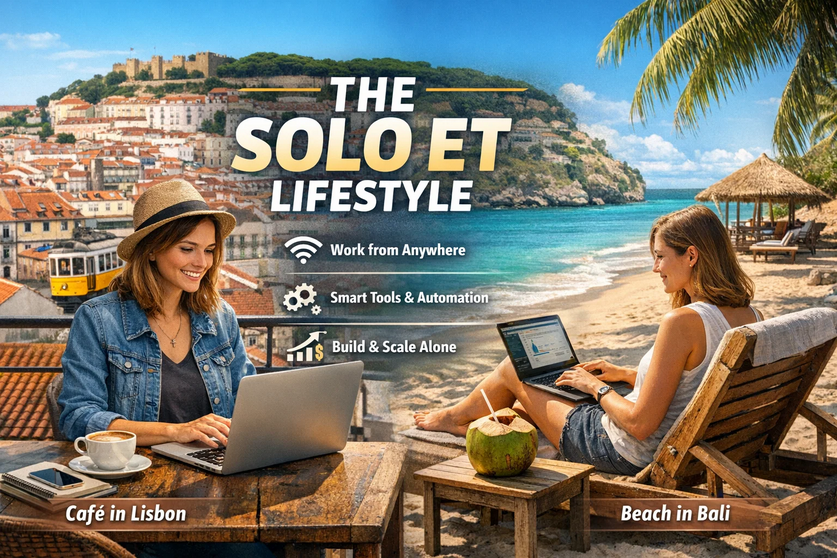
Have you ever imagined running a profitable business from a café in Lisbon or a beach in Bali, managing everything yourself with the help of smart tools and automation? If you’re a freelancer, digital nomad, or aspiring entrepreneur, you’ve probably come across the term Solo ET. This concept represents a growing trend in independent, tech-driven entrepreneurship, where one person can build and scale a business without a large team or hefty investment. In this guide, we’ll explore what Solo ET is, its benefits, and how you can start your own solo venture.
What is Solo ET?
Solo ET stands for Solo Entrepreneurial Trend. It describes a modern approach to business where individuals handle all aspects of their company independently, leveraging digital tools, AI, and automation to optimize workflow. Unlike traditional freelancing, which often trades hours for money, Solo ET focuses on creating systems, products, and recurring revenue streams that grow over time.
Think of it as being the captain of your own ship: you make the decisions, but you use technology—like AI software, automation tools, and no-code platforms—to steer efficiently. Since 2020, Solo ET has gained momentum thanks to the rise of remote work and tools such as ChatGPT, Webflow, and Zapier, making it easier than ever for solo founders to launch global businesses.
For international context, in countries like France, Solo ET aligns with structures such as the micro-entreprise, which allows solo entrepreneurs to operate independently with simplified taxes and administration. The essence of Solo ET is career autonomy: building a business that fits your lifestyle, whether you’re a content creator, consultant, app developer, or online educator.
Benefits of Solo ET
Choosing the Solo ET path comes with several advantages:
| Benefit | Description | Example |
|---|---|---|
| Freedom & Flexibility | Work from anywhere, choose your hours | Running an affiliate website from Bali |
| High Profit Margins | Low overhead, higher earnings | Keeping 80% of revenue from digital courses |
| Scalability | Automate processes to grow without hiring | Email marketing automation for thousands of subscribers |
| Low Startup Costs | Start with minimal investment | Launching a newsletter using Substack |
| Personal Growth | Full ownership builds skills fast | Learning AI to generate content efficiently |
A common misconception is that Solo ET isolates you. In reality, many entrepreneurs hire contractors for specialized tasks like design, coding, or editing, while maintaining control over core operations. This “hybrid solo” model maximizes efficiency while keeping the business lean.

How to Start as a Solo ET
Starting a Solo ET business doesn’t require a big budget or complex legal setup. Here’s a step-by-step approach:
- Validate Your Idea – Test your concept with potential customers via social media, Reddit, or LinkedIn polls.
- Choose a Business Model – Subscription services, digital products, online courses, or micro SaaS are all common options.
- Register Your Business – In the US or UK, a sole proprietorship is straightforward. In France, the micro-entreprise simplifies taxes for small solo ventures.
- Set Up Tools – Use platforms like QuickBooks for accounting, Canva for design, and Webflow for websites.
- Launch Your Online Presence – Build a simple website and start marketing your product.
Solo ET for Digital Nomads
Digital nomads thrive with Solo ET because it’s location-independent. You can manage clients and operations from anywhere with reliable internet. Tools like Notion, Zapier, and Slack make it easy to coordinate projects asynchronously across time zones.
Successful solo founders like Pieter Levels, who runs Nomad List and other online businesses solo, demonstrate the potential of this model. Solo ET allows you to travel, explore new cultures, and generate revenue simultaneously.
Key Terms in Solo ET
- Recurring Revenue – Consistent income from subscriptions or memberships.
- MVP (Minimum Viable Product) – A basic version of your product to test the market.
- Automation Tools – Software like Zapier or AI that reduces manual effort.
- Limited Liability Structures – Legal protections for personal assets, like EURL in France.
Solo ET vs Sole Proprietorship
While Solo ET is a business mindset, a sole proprietorship is a legal entity. Most Solo ET businesses operate under such structures, but Solo ET emphasizes technology-driven independence and scalability.
| Aspect | Solo ET | Sole Proprietorship |
|---|---|---|
| Focus | Asset-building, automation | Legal registration for one owner |
| Liability | Depends on chosen structure | Unlimited personal liability |
| Setup | Mindset + tools | Government registration |
| Scalability | High with digital leverage | Limited by personal hours |
Tips for Launching a Solo ET
- Start small and focus on a niche you’re passionate about.
- Build an MVP and get feedback early.
- Use contractors for specialized tasks.
- Track finances and automate wherever possible.
- Celebrate milestones to stay motivated.
Real-life examples show Solo ET can be highly profitable. Entrepreneurs like Justin Welsh have grown solo businesses to millions in revenue through content, digital products, and smart automation.
Regulations and Requirements
Requirements are minimal: a skill, a computer, and internet access. Regulations vary by country:
- EU: GDPR compliance is mandatory for data handling.
- US: File self-employment taxes.
- France: Micro-entreprise caps service revenue at €176,200 with simplified taxes.
Always consult local advisors to stay compliant.
Conclusion
Solo ET empowers individuals to create independent businesses that are flexible, scalable, and aligned with their lifestyle. With low startup costs, digital tools, and smart automation, it’s possible to build a thriving business as a single founder anywhere in the world. Whether you’re a freelancer, digital nomad, or aspiring entrepreneur, Solo ET offers a roadmap for freedom, growth, and financial independence.
FAQs – Solo ET
1. What does Solo ET mean?
It stands for Solo Entrepreneurial Trend, focusing on independent businesses using technology and automation.
2. Is Solo ET the same as freelancing?
No. Freelancers trade time for money; Solo ET focuses on building scalable assets and systems.
3. Can I start Solo ET part-time?
Yes, many begin as side projects while testing ideas.
4. What tools are needed for Solo ET?
AI tools like ChatGPT, Webflow for websites, Zapier for automation, and accounting software.
5. Can Solo ET work internationally?
Yes. Structures like France’s micro-entreprise or remote work visas make it feasible globally.
Get more updates or Stories on Pep Boys