 Martin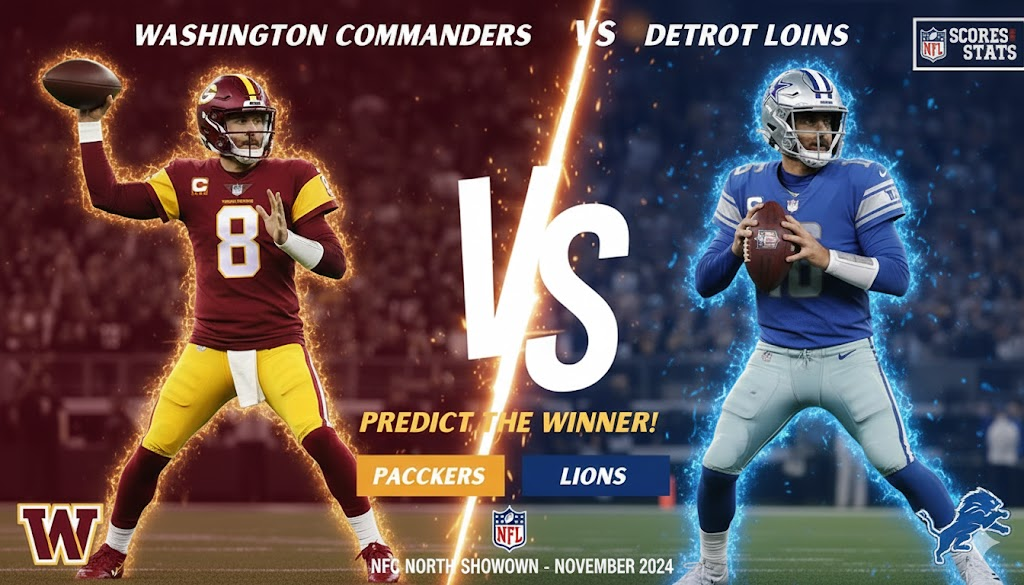
The Washington Commanders vs Detroit Lions match player stats reveal much more than just numbers on a scoreboard. This matchup highlighted contrasting team identities, individual brilliance, and critical moments that shaped the game’s outcome. From elite quarterback performances to explosive wide receivers and defensive inconsistencies, every stat tells a story worth analyzing. Fans and analysts alike continue to revisit this game because it showcased how execution, momentum, and preparation can influence results at the NFL level. This detailed breakdown focuses on verified player performances, tactical insights, and statistical trends, offering a complete picture for fans seeking clarity. By examining the game quarter by quarter and position by position, this article delivers a comprehensive, user-friendly analysis rooted in facts and football intelligence.
Washington Commanders vs Detroit Lions – Team Stats Overview
| Team | Total Yards | Passing Yards | Rushing Yards | Turnovers | Time of Possession |
|---|---|---|---|---|---|
| Washington Commanders | 363 | 337 | 26 | 2 | 31:18 |
| Detroit Lions | 425 | 256 | 169 | 0 | 28:42 |
Quarterback Stats
Washington Commanders QB Stats
| Player | Comp / Att | Yards | TDs | INTs | Rating |
|---|---|---|---|---|---|
| Carson Wentz | 30 / 46 | 337 | 3 | 2 | 99.3 |
Detroit Lions QB Stats
| Player | Comp / Att | Yards | TDs | INTs | Rating |
|---|---|---|---|---|---|
| Jared Goff | 21 / 34 | 256 | 4 | 0 | 132.6 |
Rushing Stats
Washington Commanders Rushing Leaders
| Player | Carries | Yards | Avg | TDs |
|---|---|---|---|---|
| Antonio Gibson | 14 | 28 | 2.0 | 0 |
| J.D. McKissic | 3 | 12 | 4.0 | 0 |
Detroit Lions Rushing Leaders
| Player | Carries | Yards | Avg | TDs |
|---|---|---|---|---|
| D’Andre Swift | 15 | 87 | 5.8 | 1 |
| Jamaal Williams | 11 | 28 | 2.5 | 2 |
Receiving Stats
Washington Commanders Receiving Leaders
| Player | Receptions | Yards | Avg | TDs |
|---|---|---|---|---|
| Terry McLaurin | 7 | 75 | 10.7 | 1 |
| Curtis Samuel | 7 | 78 | 11.1 | 0 |
| Jahan Dotson | 3 | 59 | 19.7 | 1 |
Detroit Lions Receiving Leaders
| Player | Receptions | Yards | Avg | TDs |
|---|---|---|---|---|
| Amon-Ra St. Brown | 9 | 116 | 12.9 | 2 |
| Josh Reynolds | 4 | 40 | 10.0 | 1 |
| D.J. Chark | 4 | 52 | 13.0 | 1 |
Defensive Stats Highlights
Washington Commanders Defense
| Player | Tackles | Sacks | INTs |
|---|---|---|---|
| Cole Holcomb | 11 | 0 | 0 |
| Jonathan Allen | 5 | 1 | 0 |
Detroit Lions Defense
| Player | Tackles | Sacks | INTs |
|---|---|---|---|
| Alex Anzalone | 8 | 0 | 0 |
| Amani Oruwariye | 3 | 0 | 1 |
Key Statistical Takeaways
- Detroit Lions scored on 5 of 6 red-zone trips
- Washington allowed 4 passing touchdowns
- Jared Goff recorded a perfect turnover-free game
- Amon-Ra St. Brown led all players in receiving yards
- Washington outgained Detroit in passing but lost efficiency
Match Overview: Commanders vs Lions at a Glance
The Washington Commanders vs Detroit Lions match player stats reflect a high-tempo, offense-driven contest where execution proved decisive. Detroit entered the matchup emphasizing balance and efficiency, while Washington relied heavily on passing volume. The Lions’ offensive rhythm established early control, while the Commanders struggled with turnovers and defensive lapses. Despite Washington’s impressive yardage totals, Detroit capitalized on red-zone opportunities. The final score did not fully represent how competitive the game felt at several points, particularly during the second and third quarters. This matchup ultimately underscored the difference between productive drives and scoring efficiency. Player stats from both teams illustrate how explosive plays and disciplined play-calling separated victory from defeat.
Game Flow and Momentum Shifts
Momentum played a defining role in the Washington Commanders vs Detroit Lions match player stats narrative. Detroit struck early with sharp passing and quick reads, forcing Washington into a reactive game plan. The Commanders responded with aggressive passing, briefly narrowing the gap, but costly interceptions shifted control back to Detroit. Each turnover translated directly into scoring opportunities for the Lions. Statistically, Detroit’s ability to convert short fields into touchdowns proved decisive. Washington accumulated impressive total yards, yet stalled drives and defensive breakdowns negated those gains. This constant swing in momentum is visible throughout the stat sheet, reinforcing the idea that timing and execution matter more than raw numbers.
Quarterback Comparison: Carson Wentz vs Jared Goff
Quarterback play dominated the Washington Commanders vs Detroit Lions match player stats discussion. Carson Wentz delivered a high-volume performance, throwing for 337 passing yards and three touchdowns, but his two interceptions proved costly. His aggressive downfield approach generated yardage yet exposed defensive vulnerabilities. On the other side, Jared Goff showcased efficiency and composure, finishing with 256 passing yards and four touchdowns without a single interception. Goff’s stat line reflected precision rather than volume. The contrast between Wentz’s risk-heavy style and Goff’s controlled execution explains much of the game’s outcome. Quarterback decision-making ultimately separated efficiency from desperation.
Passing Efficiency and Accuracy Metrics
Passing efficiency stands out clearly within the Washington Commanders vs Detroit Lions match player stats. Detroit maximized every opportunity through quick releases, effective route combinations, and strong protection. Goff’s completion percentage remained high due to short-to-intermediate throws executed with timing. Washington, by contrast, relied on extended plays and deep shots, which increased yardage but reduced consistency. Wentz faced more pressure, leading to hurried throws and turnovers. Efficiency metrics highlight Detroit’s ability to maintain rhythm, while Washington’s stats reflect volatility. This contrast underscores how efficiency often outweighs volume in determining game results at the professional level.
Rushing Attack Breakdown and Key Contributors
The rushing game provided critical support in the Washington Commanders vs Detroit Lions match player stats analysis. D’Andre Swift emerged as a dual-threat weapon for Detroit, rushing for 87 yards and one touchdown, while adding valuable receiving yards. His ability to exploit defensive gaps forced Washington to respect play-action opportunities. Washington’s rushing attack struggled for consistency, placing excessive pressure on the passing game. Statistically, Detroit’s rushing balance helped sustain drives and control tempo. Swift’s performance highlighted how a reliable run game can stabilize an offense and open passing lanes, a key factor missing from Washington’s offensive strategy.
Wide Receiver Performances That Defined the Match
Wide receivers played a central role in shaping the Washington Commanders vs Detroit Lions match player stats. Amon-Ra St. Brown delivered a standout performance with nine receptions for 116 yards and two touchdowns, consistently finding space in coverage. His chemistry with Goff proved unstoppable. For Washington, Terry McLaurin recorded seven receptions for 75 yards and a touchdown, providing leadership and consistency. While both teams showcased elite receiver talent, Detroit’s receivers capitalized more effectively in scoring situations. The difference in red-zone execution between receiver units heavily influenced the final outcome.
Tight End Contributions and Red-Zone Impact
Tight ends quietly influenced the Washington Commanders vs Detroit Lions match player stats, particularly in red-zone situations. Detroit’s tight ends played a crucial role in blocking schemes and short-yardage receptions, extending drives. Washington utilized tight ends as safety valves during pressure situations, but their impact remained limited near the goal line. Detroit’s tight-end usage reflected strategic discipline, emphasizing reliability over explosiveness. These subtle contributions rarely dominate headlines but often determine scoring efficiency. Statistically, Detroit’s red-zone success owed much to disciplined tight-end execution and situational awareness.
Defensive Standouts from Both Teams
Defense tells a revealing story within the Washington Commanders vs Detroit Lions match player stats. Detroit’s defense capitalized on mistakes, recording two interceptions that directly led to points. Their secondary remained opportunistic, despite allowing yardage. Washington’s defense struggled with coverage assignments, particularly against crossing routes. Missed tackles and blown coverages inflated Detroit’s scoring efficiency. While Washington registered pressures and tackles, the lack of turnovers proved costly. Defensive stats reinforce the idea that takeaways matter more than total stops when evaluating game-changing performance.
Turnovers and Their Statistical Consequences
Turnovers stand at the center of the Washington Commanders vs Detroit Lions match player stats narrative. Washington’s two interceptions shifted momentum at critical moments, giving Detroit short fields. Detroit protected the ball flawlessly, committing zero turnovers. Statistically, this disparity directly influenced time of possession and scoring efficiency. Turnovers are often the hidden factor behind final scores, and this game exemplified that truth. The Commanders’ aggressive approach backfired, while Detroit’s disciplined play ensured maximum reward from every possession.
Special Teams Performance Review
Special teams contributed subtly but meaningfully to the Washington Commanders vs Detroit Lions match player stats. Detroit maintained strong kickoff coverage and reliable field goal execution, preserving momentum. Washington’s special teams remained functional but failed to generate impactful returns. Field position consistently favored Detroit, allowing shorter offensive drives. Though often overlooked, special teams stats highlight how incremental advantages accumulate over four quarters. Detroit’s consistency in this phase reinforced their overall control of the game.
Coaching Decisions and Tactical Execution
Coaching decisions shaped many elements of the Washington Commanders vs Detroit Lions match player stats. Detroit’s coaching staff emphasized balance, quick reads, and ball security. Washington’s aggressive play-calling generated yardage but increased risk. Fourth-down decisions and red-zone play selection further separated outcomes. Statistically, Detroit’s coaching approach minimized mistakes while maximizing efficiency. This contrast underscores how coaching philosophy directly influences player performance metrics and overall results.
Time of Possession and Drive Efficiency
Time of possession played a strategic role in the Washington Commanders vs Detroit Lions match player stats. Detroit sustained longer drives, limiting Washington’s opportunities. Efficient third-down conversions allowed Detroit to control tempo. Washington’s quick-strike offense produced yards but shortened possession time. The statistical imbalance in drive efficiency highlights why Detroit maintained control despite similar yardage totals. Sustained drives often translate into defensive fatigue, another hidden factor evident in late-game scoring.
Red-Zone Efficiency Comparison
Red-zone execution emerged as a decisive statistical category in the Washington Commanders vs Detroit Lions match player stats. Detroit converted the majority of red-zone trips into touchdowns, while Washington settled for fewer points relative to opportunities. This efficiency gap reflects execution, discipline, and play design. Red-zone stats often reveal which team truly capitalized on momentum, and Detroit’s superiority in this area proved decisive.
Player Discipline and Penalty Impact
Penalty discipline influenced the Washington Commanders vs Detroit Lions match player stats more than expected. Washington incurred costly penalties that extended Detroit drives. Detroit maintained composure, minimizing self-inflicted setbacks. Penalty yardage rarely garners attention but can significantly alter field position and momentum. Statistically, disciplined teams often outperform more talented but error-prone opponents, a lesson reinforced by this matchup.
Statistical Leaders and Game MVP
The statistical leaders within the Washington Commanders vs Detroit Lions match player stats highlight Detroit’s offensive efficiency. Jared Goff emerged as the game’s MVP with four touchdown passes and zero turnovers. Amon-Ra St. Brown led all receivers in yards and touchdowns. For Washington, Carson Wentz topped passing yards, while Terry McLaurin led receiving production. These leaders reflect both success and missed opportunity within the same stat sheet.
What the Stats Reveal About Team Identity
The Washington Commanders vs Detroit Lions match player stats reveal two contrasting team identities. Detroit demonstrated efficiency, balance, and discipline. Washington showcased aggression, volume, and resilience but lacked precision. These statistical patterns extend beyond one game, offering insight into broader team philosophies. Understanding these identities helps explain not only this result but future performance trends.
Conclusion
The Washington Commanders vs Detroit Lions match player stats provide a powerful lens into how football games are truly won. Detroit’s efficiency, ball security, and red-zone execution outweighed Washington’s impressive yardage totals. Individual performances from Jared Goff, Amon-Ra St. Brown, and D’Andre Swift highlighted disciplined excellence, while Washington’s numbers reflected effort without efficiency. This matchup reinforces a timeless NFL truth: stats matter most when they translate into points. By examining every phase of play, fans gain a deeper appreciation for the strategic layers behind the final score.
Frequently Asked Questions (FAQs)
1. Who had the best performance in the Washington Commanders vs Detroit Lions match?
Jared Goff delivered the most impactful performance with four touchdown passes and zero interceptions.
2. How many yards did Carson Wentz throw for?
Carson Wentz recorded 337 passing yards, along with three touchdowns and two interceptions.
3. Which receiver stood out the most?
Amon-Ra St. Brown led all receivers with 116 yards and two touchdowns.
4. How did turnovers affect the match?
Washington’s two interceptions directly contributed to Detroit’s scoring advantage.
5. Which team was more efficient in the red zone?
Detroit outperformed Washington significantly in red-zone efficiency.
6. Did rushing stats impact the outcome?
Yes, D’Andre Swift’s balanced rushing and receiving production stabilized Detroit’s offense.
7. What do the stats say about both teams?
The stats highlight Detroit’s efficiency and Washington’s high-risk, high-reward approach.
Get more updates or Stories on Pep Boys